
Why is document automation in manufacturing becoming so importatant?
In today’s competitive and highly regulated manufacturing environment, success isn’t just about machinery and materials — it’s also about managing information effectively. From safety protocols and equipment maintenance logs to quality control records and compliance documentation, every part of the manufacturing process relies on accurate, timely and accessible documentation.
Yet for many manufacturers, these documents are still trapped in outdated systems — paper files, disconnected spreadsheets or scattered emails. That’s where document automation comes in. It’s not just about going paperless; it’s about fundamentally transforming how information flows through your organisation.
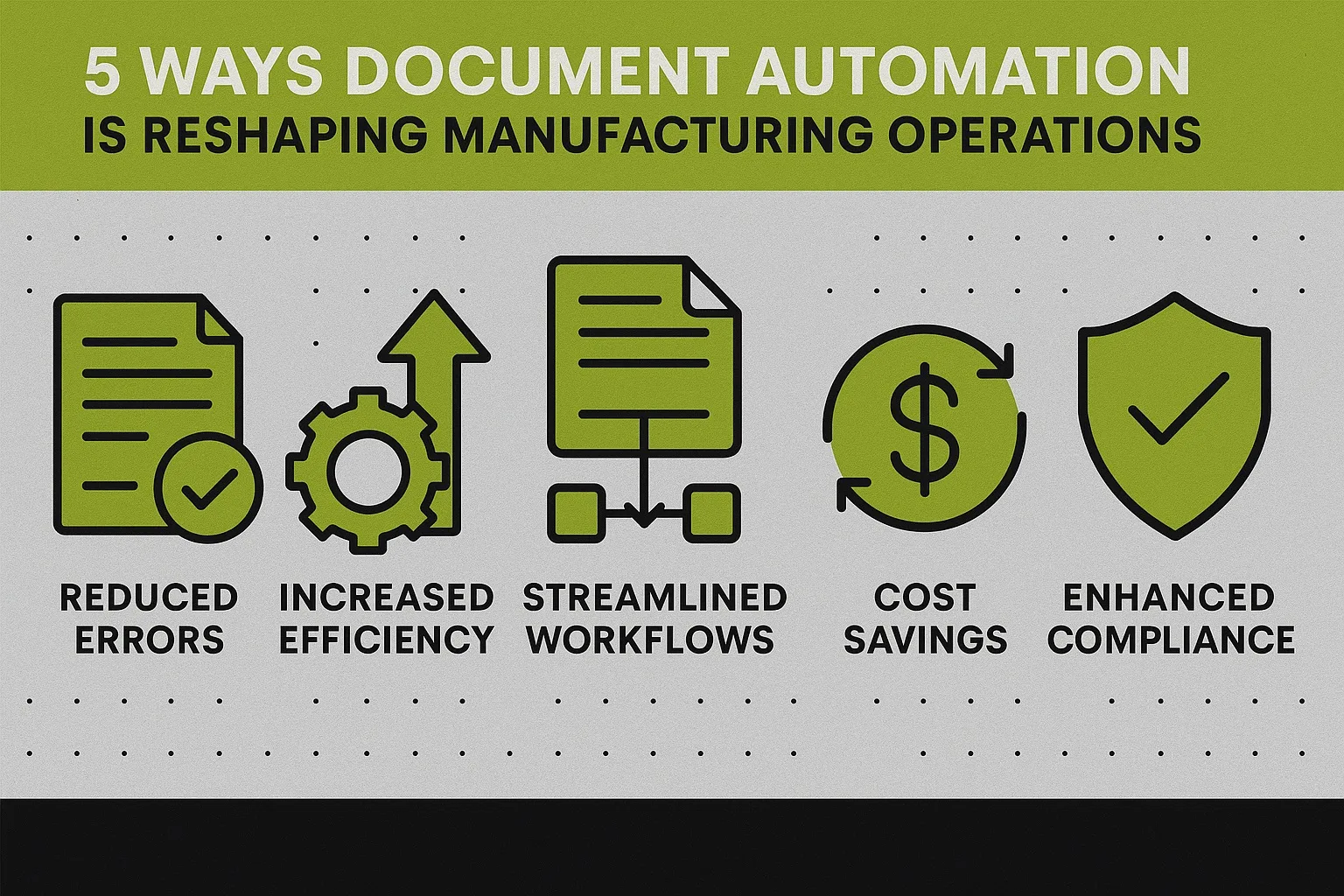
In this article, we explore five powerful ways document automation is reshaping manufacturing operations — and why it’s becoming a cornerstone of modern, efficient and compliant manufacturing.
1. Eliminating Paper Chasing: Centralised, Streamlined Documentation
Think about how much time is wasted every day looking for the right version of a document, hunting for approvals, or printing paper documents and scanning forms. In many manufacturing facilities, these delays can slow down production or even lead to errors that affect product quality.
Document automation software removes the need for these manual, error-prone processes. Whether it’s a Standard Operating Procedure (SOP), a Work Order or a Maintenance Checklist, automation tools generate and store documents centrally. They can also apply metadata (like document type, department, version number), to make it easy to retrieve exactly what you need, when you need it.
For example, a quality manager can instantly pull the latest version of a product inspection checklist from a centralised digital repository, which ensures that staff are always working with the most up-to-date procedures.
2. Faster Approvals and Workflow Integration
Approvals are a huge part of manufacturing operations. Production documents, engineering change requests, non-conformance reports, procurement orders — these documents need to be signed off by the right people at the right time. In manual systems, this often means delays, missed emails and a lack of visibility into where things stand.
With document automation, workflow processes become seamless. Workflow automation routes documents to the appropriate individuals or departments based on predefined rules. Alerts and reminders are built in, so approvers are notified automatically and actions can be tracked in real time.
Let’s say a production engineer submits a design change request. Instead of sending a paper form or email, the system routes the document to the appropriate stakeholders — engineering, quality assurance and operations — in sequence or parallel, depending on your workflow rules. Once approved, the change is logged, the relevant SOPs are updated automatically, and the new instructions are distributed across the team.
This kind of streamlined workflow reduces cycle times, eliminates bottlenecks and improves visibility at every step.
See Document Automation Software in Action >>>

3. Fewer Errors and Better Compliance
One of the most significant risks in manufacturing is human error — particularly when it comes to documentation. Manual data entry, outdated forms and misfiled paperwork can all lead to production mistakes, regulatory non-compliance and costly audits.
Document automation drastically reduces this risk by integrating directly with systems like your ERP (Enterprise Resource Planning) or MES (Manufacturing Execution System). Data is pulled directly from these systems, which ensures accuracy and consistency. For example, a batch production record can automatically populate with real-time data from the shop floor — temperatures, weights, times — without manual input.
This level of accuracy is crucial not only for quality assurance but also for compliance. Many industries — such as pharmaceuticals, aerospace and food manufacturing — are governed by strict regulations and standards, including:
- ISO 9001 (Quality Management Systems)
- FDA 21 CFR Part 11 (for electronic records and signatures)
- GMP (Good Manufacturing Practices)
- OSHA (Occupational Safety and Health Administration) guidelines
- AS9100 (for aerospace manufacturing)
These standards are important in the manufacturing industry and often require detailed documentation and clear audit trails. Automated document systems create, store and track these records with time stamps, version control and access logs — giving you peace of mind during internal and external audits.
You can also embed best practices for compliance with the General Data Privacy Regulation (GDPR)
4. Real-Time Access, Anywhere on the Floor (or Offsite)
Manufacturing is dynamic. Line supervisors, technicians and quality inspectors all need instant access to the most current documents to do their jobs effectively. But when those documents are buried in a filing cabinet, spread across multiple systems or locked on someone’s desktop, it creates delays and confusion.
Cloud-based document automation systems solve this by enabling real-time access to documents from any device — tablets, phones, desktops — whether you’re on the production floor, in the office or working remotely. Need to update a job traveller or pull up a calibration certificate? You can do it from anywhere, and the system ensures that everyone is viewing the same current version.
This is especially important for multi-site manufacturers, where consistency and communication between facilities can make or break operational performance.
5. More Time for High-Value Work
Manufacturing teams are under constant pressure to improve throughput, maintain quality and meet deadlines. The last thing they need is to spend hours filling out forms, hunting for files or redoing work because of documentation errors.
By automating document creation, routing, storage and retrieval, manufacturers free up their employees to focus on what really matters — innovation, process improvement and production excellence. Engineers can spend more time refining designs, not chasing signatures. Quality teams can focus on root cause analysis, not paperwork. And operations can focus on moving product, not pushing paper.
When people aren’t bogged down with low-value administrative tasks, overall productivity improves — and so does job satisfaction.
Document Automation in Manufacturing Bonus: Scalability and Future-Proofing
As manufacturers grow, manual systems and hybrid systems quickly become limiting factors. What works for a 10-person team often breaks under the pressure of a larger, multi-department operation. Document automation provides the scalability and flexibility to grow with your business.
Modern automation platforms can integrate with emerging technologies — AI, IoT and advanced analytics — setting the stage for Industry 4.0 initiatives. For example, IoT sensors can trigger automated maintenance logs, which are stored and sent without any human interaction.
This isn’t just about saving time. It’s about preparing for a future where digital agility determines competitiveness.
Final Thoughts: The Quiet Revolution of Document Automation in Manufacturing
Document automation might not get the spotlight like robotics or AI, but its impact on manufacturing is just as profound. Document automation is transforming the backbone of operations — the operational documents, po;icy documents, legal documents, records and automated workflows that guide every machine and every person on the floor.
Whether you’re aiming to meet strict regulatory standards, reduce human error or simply make life easier for your team, focusing on document processes and automating your documents is one of the smartest investments you can make. It’s not just about reducing paperwork; it’s about unlocking new levels of efficiency, accuracy and confidence.
If you haven’t already explored document automation for your operations, now is the time. The benefits are real, the technology is mature, and the real-world competitive edge for business growth is yours for the taking.
Related Manufacturing Articles
Read more about Document Management for Manufacturing