
Document Management Software to Protect Student Data: Avoid FERPA Violations
In the education sector, maintaining compliance with FERPA (Family Educational Rights and Privacy Act) regulations is crucial for protecting sensitive information. The right FERPA compliance document management system ensures that schools, colleges and universities adhere to strict data security and privacy requirements.
One of the standout solutions in this space is Document Manager, a comprehensive platform designed with robust safeguards, including advanced audit trails and redaction tools, to strict regulatory standards such as FERPA, CCPA, HIPPA and HITECH.
This article explores the reasons behind growing data protection challenges, highlights common FERPA violations, outlines potential consequences of FERPA violations, and presents a software solution to help schools reduce FERPA violation risks.
What Is FERPA?
FERPA, enacted by the U.S. Department of Education (DoE), is a federal law designed to safeguard the privacy of student education records in schools receiving federal funding. This includes nearly all U.S. K–12 schools and higher education institutions, as federal aid makes up a significant portion of educational budgets.
FERPA is built around two main principles:
- Students’ education records must remain confidential.
- Students must be granted access to their own records upon request.
Although these principles are clear, the landscape of FERPA compliance has become more challenging owing to the evolving nature of data handling and increased digital communication.
What Is FERPA Compliance Document Management Software?
FERPA compliance document management software is a specialized tool designed to store, manage and share electronic protected education records securely.
FERPA-compliant document solutions incorporate stringent security measures such as encryption, access controls and audit trails that help organizations meet FERPA’s Privacy Rule and Security Rule requirements.
Key Features of FERPA-Compliant Software
- Data Encryption
Ensures that all data, whether at rest or in transit, is encrypted to prevent unauthorized access and protect against cyberattacks. - Redaction
Redaction masks (blacks out) sensitive data such as student and staff information that must not be shared unedited or viewed by unauthorized personnel. Redaction is essential in preventing the consequences of FERPA violations. - Access Controls
Restricts data access to authorized personnel through role-based permissions which is essential for FERPA-safe data.. - Audit Trails
Tracks all user activity, providing a detailed log for compliance and security monitoring whichcan be provided as evidence of robust data protection practices in the event of an enquiry. - Data Backup and Recovery
Guarantees the availability of data even during disasters or system failures.
Why Choose Document Manager?
Document Manager stands out as a leading FERPA-compliant document management solution, particularly for educational organizations. It offers the following features:
1. Advanced Audit Trail
Document Manager’s advanced audit trails meticulously track all actions within the system. This feature ensures that any access, modification or sharing of information is recorded, which enables organizations to demonstrate compliance with FERPA security safeguards. It provides:
- Real-time monitoring of user activities.
- Detailed logs for audits and investigations.
- Enhanced transparency and accountability.
- Redaction functions.
2. Secure Document Handling
Document Manager ensures that all files, including sensitive staff and student information, are securely stored and managed. Its robust access control and encryption protocols minimize risks of data breaches or unauthorized access.
3. Scalability and Integration
Document Manager is suitable for education organizations of all sizes. Its ability to integrate seamlessly with existing business systems and other software ensures smooth workflows and efficient data management.
4. Cross-departmental collaboration
Document Manager can function as your FERPA-compliant accounting software and HR system, with the same advanced security and audit trails to ensure safeguards are FERPA compliant. Document Manager provides a secure central document repository that integrates with Accounts, HR, ERP and other business-critical systems to enhance security and efficiency.
Why Is FERPA Compliance Becoming More Difficult?
Several key factors contribute to the rising complexity of FERPA compliance:
- Data Volume and Technology Use
Schools now manage vast amounts of digital student data. More platforms and software systems mean greater risk and more opportunities for errors. - Ambiguous Language and Multiple Amendments
Since its enactment in 1974, FERPA has been
revised more than ten times. These changes have introduced exceptions and nuances that can be confusing to interpret, particularly regarding which types of information may be shared without consent.
Because of these challenges, it is recommended that schools adopt specialized tools, such as automated workflow and redaction software, to help maintain compliance and protect student privacy.
Examples of Frequent FERPA Violations
According to a former FERPA official, the following are among the most common breaches – many of which occur accidentally:
1. Letters of Recommendation
Letters of recommendation are typically part of a student’s education record, meaning they require written consent to share. However, when sent between educational institutions, consent isn’t necessary. Problems arise when these letters are shared with external entities, like employers, without authorization.
2. Group Emails
A common digital misstep is failing to use BCC in emails sent to multiple recipients. This can expose student email addresses or other sensitive data unintentionally.
3. Disclosing Academic Status
Revealing a student’s academic standing – for example, a coach mentioning that a student-athlete is ineligible due to grades – constitutes a FERPA breach. Academic performance is protected information, and casual disclosure violates privacy rules.
What Are the Penalties for FERPA Violations?
Violating FERPA can result in a range of consequences, including:
- Loss of federal funding
- Legal action by affected individuals
- Sanctions or investigations by the DoE
- Loss of accreditation
- Disciplinary action for staff
- Court-ordered corrective measures or injunctions
- Civil fines
- In extreme cases, criminal prosecution
The severity of these penalties depends on the intent behind the violation and the impact it causes.
Preventing FERPA Violations: Practical Recommendations
Educate All Stakeholders
Ensure that teachers, staff, students and parents understand FERPA’s purpose, their rights and the consequences of non-compliance. Regular training can reinforce key concepts and reduce unintentional data breaches.
Clarify What FERPA Protects
FERPA applies to both personally identifiable information (PII) and directory information.
- PII includes names, Social Security numbers, birthplaces and other data that could identify a student.
- Directory information might include a student’s name, address, or field of study, and while generally not considered private, it can overlap with PII in certain situations.
Staff must be trained to distinguish between these types and know when consent is required before disclosing any information.
Know When Disclosure Is Permitted Without Consent
FERPA includes specific exceptions that allow schools to share records without prior consent:
- School officials with legitimate educational interests
- Schools to which a student is transferring
- Government agencies for audit or enforcement
- Emergency situations involving safety or health
- To determine eligibility for financial aid
Schools must document these disclosures and ensure they are made in accordance with legal requirements.
Inform Parents and Students of Their Rights
Schools are required to notify parents and eligible students annually about their FERPA rights, which include:
- The right to inspect and review records
- The right to request amendments to inaccurate records
- The right to restrict the sharing of directory information
- The right to give or withhold consent for PII disclosure
- The right to file a complaint about violations
Implement Strong Policies and Staff Training
The complexity of FERPA makes routine training essential. Policies and procedures should be established to ensure consistent application of FERPA standards across the institution.
How Document Logistix Supports FERPA Compliance
Document Logistix enables you to embed best practices in your workflows to prevent system users accidentally or wilfully breaching FERPA. Document Manager’s suite of compliance tools is tailored to the needs of educational institutions aiming to secure student data. These include:
- Document redaction tools enable system users to hide sensitive student data
- Data encryption tools guard against unauthorized access and cyber threats
- Security audits and compliance tracking enable schools to keep comprensive activity logs as evidence of correct FERPA data handling
These solutions help schools reduce the risk of non-compliance, particularly when dealing with third-party data sharing.
Data Protection Summary
FERPA compliance is no longer just a matter of policy – it’s a critical part of day-to-day operations in modern educational environments. With the right tools, clear guidelines and consistent training, schools can effectively manage student privacy and remain compliant with federal regulations.
Benefits of Document Management Software for FERPA Compliance
Investing in FERPA-compliant document management software like Document Manager offers several advantages:
Enhanced Data Security
Protects sensitive information from breaches.
Regulatory Compliance
Simplifies adherence to FERPA regulations.
Document Data Redaction
Hiding confidential personal data is an essential component of schools’ FERPA compliance software.
Operational Efficiency
Streamlines document workflows, saving time and resources.
Reduced Risk
Minimizes the risk of non-compliance penalties or data breaches and enables educators to share information safely with parents and other third parties.
Final Thoughts
Choosing the right FERPA-compliant document management software is essential for educators to safeguard data and meet regulatory requirements.
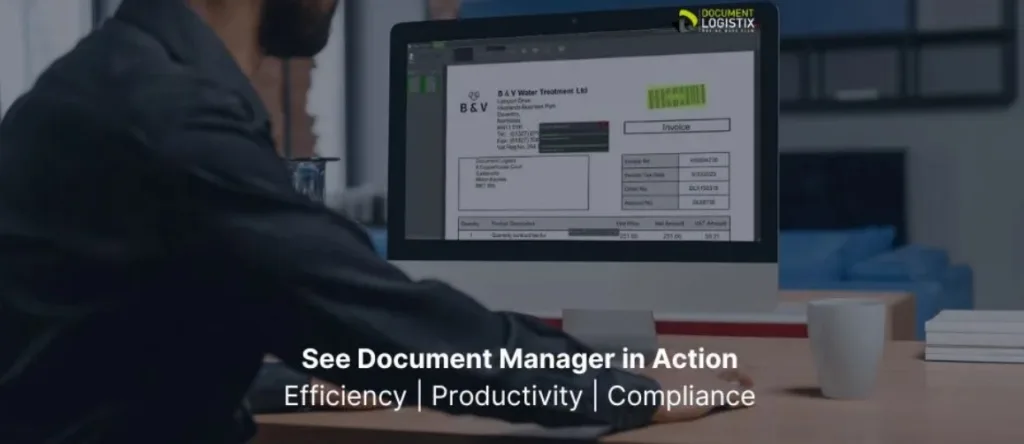
Document Manager is a powerful option that provides robust security features, including redaction and advanced audit functions. By leveraging this solution, educators can ensure the integrity, confidentiality and availability of their data while improving operational efficiency.
For more information on how FERPA-compliant document management software can benefit your organization, consider exploring the features of Document Manager today.
Q&A
Q. Must US schools redact documents when sharing student information?
Yes, U.S. schools must redact documents when sharing student information if the content includes personally identifiable information (PII) and the disclosure is not covered by a FERPA exception. Redaction helps ensure compliance with FERPA by protecting student privacy when records are shared with unauthorized individuals or third parties.
Q. Can a Teacher be Fired for Violating FERPA?
Yes, a teacher can be fired for violating FERPA, but whether termination occurs depends on several factors:
Key Factors That Influence Disciplinary Action
Severity of the Violation
A minor, unintentional breach (like forgetting to use BCC in an email) may result in a warning or retraining. A serious or wilful violation (e.g., intentionally releasing grades or private records to unauthorized parties) can lead to suspension or termination.
School or District Policies
Each school or district typically has internal disciplinary procedures. Some have a progressive discipline model, while others may enforce stricter action depending on the violation.
Intent and History
If the teacher acted maliciously or repeatedly ignored FERPA guidelines, dismissal is more likely. A first-time, unintentional offense may result in a warning or mandated training.
Impact of the Violation
If the breach causes significant harm – such as a major data leak, reputational damage or legal consequences for the school – the penalty may be more severe.
Possible Consequences for Teachers Who Violate FERPA:
- Verbal or written warning
- Mandatory FERPA training or re-training
- Suspension (with or without pay)
- Employment termination
- Legal action in extreme or wilful cases
Important Note on Teacher Dismissals
While FERPA itself doesn’t mandate firing, it allows institutions to handle enforcement internally. The U.S. Department of Education can penalize schools (e.g., withdraw funding), but it does not directly punish individual staff members – that responsibility lies with the employer.