Digital Document Management in Healthcare to Streamline Admin, Patient Care and Compliance
Introduction to Healthcare Document Management
Healthcare organisations deal with vast amounts of documentation daily, including patient records, treatment plans, prescriptions, insurance information and legal forms. Proper document management is essential for maintaining compliance, ensuring patient safety and improving efficiency across the healthcare system.
Healthcare document management is important for operational efficiency and compliance in hospitals, NHS Trusts, care homes, treatment centres and doctors’ offices (GPs).
In this comprehensive guide, we explore the importance of document management in healthcare, key features of document management systems (DMS) and how to choose the right solution for your organisation.
Check Our Page on DMS in HEALTHCARE USA
Why Document Management is Critical in Healthcare
1. Compliance with Healthcare Regulations
Healthcare providers must comply with strict regulatory frameworks such as HIPAA (Health Insurance Portability and Accountability Act), GDPR (General Data Protection Regulation), and HITRUST to protect sensitive patient information. It’s also important to meet standards set by national bodies such as the CQC (Care Quality Commission).
A robust document management system ensures compliance by:
- Securing patient data with encryption.
- Controlling access through permission-based systems.
- Maintaining audit trails to track who accessed or modified documents.
2. Enhanced Patient Care
Efficient document management leads to faster access to critical patient information, which improves:
- Clinical decision-making
Quick retrieval of medical histories, lab results, and prescriptions. - Coordination of care
Seamless sharing of patient records among specialists and departments. - Patient outcomes
Reducing delays in diagnosis and treatment.
3. Cost and Time Savings
Manual paper-based document management is time-consuming and prone to errors. By digitising documents, healthcare providers can:
- Automate workflows
Streamline processes like patient intake, billing and claims processing. - Reduce costs
Eliminate the need for physical storage and minimise administrative overhead. - Minimise human errors
Ensure data accuracy with digital forms and templates.

Point-of-Care Documentation
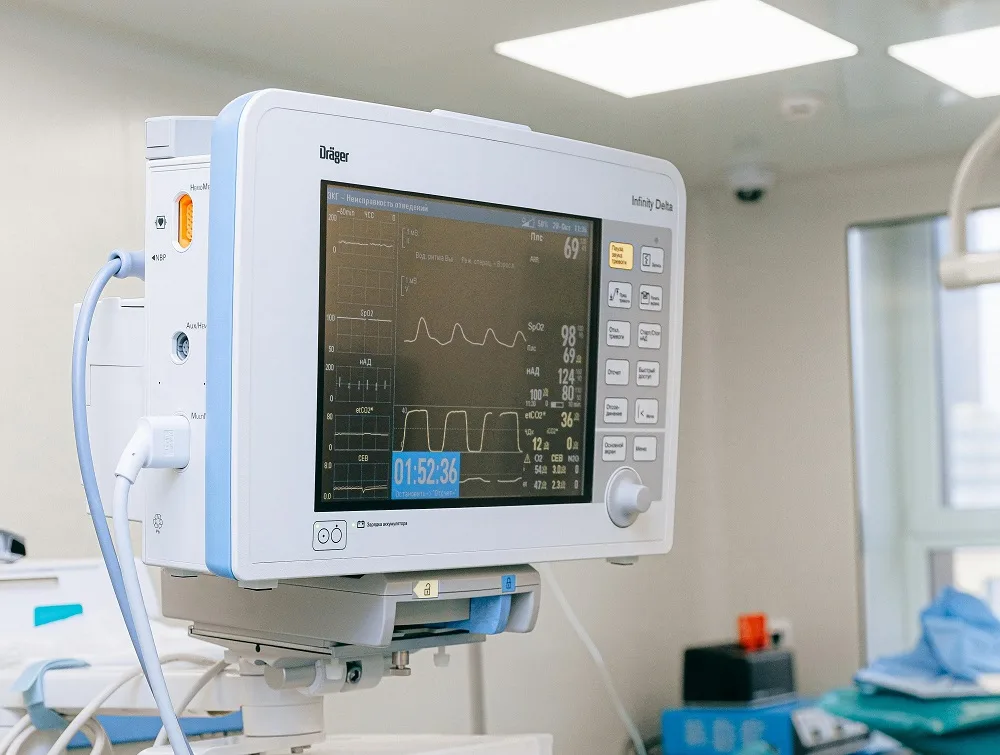
Our point-of-care documentation solution enables real-time, accurate data entry directly at the patient’s bedside via mobile devices and EHR-integrated templates.
Point-of-Care reduces documentation delays, improves clinical decision-making and enhances patient safety.
Automated workflows, structured data capture and compliance checks ensure efficiency while minimising administrative burden, enabling clinicians to focus more on patient care.
FAQs on Healthcare Document Management
Q: What is HIPAA compliance in a document management system?
A: HIPAA compliance ensures that the DMS protects patients’ personal health information by encrypting data, controlling access and maintaining detailed audit logs.
Q: How does a document management system integrate with EHR systems?
A: A healthcare DMS can integrate with EHR systems through APIs or healthcare standards like HL7, allowing seamless sharing and access to patient records across platforms.
Q: Is a cloud-based document management system secure for healthcare?
A: Yes, modern cloud-based DMS solutions use encryption, role-based access control, and frequent security updates to protect sensitive data making them secure for healthcare use. Nevertheless, many large hospitals and trusts prefer to maintain the DMS within their own critical infrastructure.
How to Choose the Right Document Management System for Healthcare
When choosing a document management solution for your healthcare organisation, consider the following factors:
1. Healthcare-Specific Features
Ensure that the DMS has features tailored for healthcare organisations, such as EMR/EHR integration, patient record handling, and HIPAA compliance.
2. User-Friendly Interface
A complicated system can hinder adoption. Choose a system with an intuitive interface that allows for easy training of staff and minimal disruption to daily operations.
3. Scalability
As your practice grows or regulations change, your DMS should adapt. Opt for a flexible, scalable solution that can handle growing volumes of data and expanding workflows.
4. Vendor Support and Security
Look for a vendor who offers 24/7 support, data encryption and robust backup solutions. Ensure the system is updated regularly to address new security threats.
How does your DMS integrate with our EHR/EMR systems?
Every patient encounter or care transition creates a series of documents which frequently manual review by staff members to route for the next steps in processing. Eventually, documents have to be placed into a system of record, often an electronic health record (EHR).
Document Manager streamlines this process to facilitate secure transmission and automated routing, processing and integration of documents and data directly into systems of record – with minimal manual intervention.
Our Document Management System (DMS) seamlessly integrates with your EHR/EMR systems through secure APIs and HL7/FHIR protocols to ensure real-time data synchronisation.
Document manager enables automated indexing, retrieval and secure storage of patient records, which improves workflow efficiency.
System integration supports role-based access, compliance with HIPAA and document sharing across departments. Additionally, our DMS enhances interoperability by integrating with existing workflows, which reduces administrative burden and ensures quick, secure access to critical patient information.

Key Features of a Healthcare Document Management System
When selecting a document management system (DMS) for healthcare, it’s crucial to focus on features that enhance security, usability and integration. Below are the must-have features:
1. Document Capture and Digitisation
- OCR Technology
Automatically scan and convert paper documents into searchable digital files. - Batch Scanning
Streamline the process of converting large volumes of paper documents. - Form Recognition
Extract structured data from forms, such as insurance claims and consent forms.
2. Secure Storage and Retrieval
- On-premises storage
Secure storage within your own infrastructure and control. - Cloud-based storage
Access documents from anywhere with secure cloud storage. - Document indexing
Use metadata (patient ID, date, type of document) to categorise and quickly retrieve documents. - Advanced search
Retrieve records instantly using full-text search, keywords or metadata.
3. Access Control and Permissions
- Role-based permissions
Limit document access to authorised staff only. - Multi-factor authentication (MFA)
Add extra layers of security to safeguard sensitive information. - Audit trails
Maintain logs of all document activities, including who accessed, edited or shared records.
4. Integration with Healthcare Systems
- EMR/EHR Integration
Ensure seamless integration with Electronic Medical Records (EMR) and Electronic Health Records (EHR) systems for unified data access. - HL7 and FHIR support
Adhere to healthcare industry standards to improve interoperability between systems.
5. Compliance Management
- HIPAA Compliance
Ensure that the DMS adheres to data protection requirements for patient health information. - Automated retention schedules
Set up retention policies to manage the lifecycle of documents and automate to ensure timely archiving or deletion.
Benefits of Using a Document Management System in Healthcare
1. Improved Patient Safety
By ensuring healthcare professionals have instant access to accurate and up-to-date patient information, a DMS helps reduce medical errors and enhances patient safety.
2. Regulatory Compliance and Risk Mitigation
Healthcare document management systems come with built-in compliance tools, reducing the risk of non-compliance fines and potential lawsuits. These systems offer end-to-end encryption, automatic audit trails and predefined retention policies that help healthcare organisations stay compliant with HIPAA, GDPR and other regulations.
3. Operational Efficiency
With automation features, a healthcare DMS speeds up repetitive tasks like document sorting, indexing and retrieval, allowing healthcare workers to focus on patient care rather than paperwork. Automated workflows and electronic signatures streamline administrative processes, saving time and resources.
4. Scalable Storage Solutions
A cloud-based document management system allows healthcare providers to scale their storage needs easily. As document volumes grow, especially with the rise of telemedicine, the system can handle increasing storage demands without slowing down operations.
Conclusion: Healthcare Document Management
Effective document management in healthcare is essential for improving patient care, ensuring regulatory compliance and optimising operational efficiency.
By implementing a secure, scalable and healthcare-specific document management system, healthcare providers can ensure the protection of sensitive data while streamlining day-to-day operations.
It’s your choice to opt for a cloud-based DMS or an on-premises system that operates within your own IT infrastructure, both of which offer unlimited storage.
Investing in the right DMS is key to supporting both healthcare professionals and their patients, leading to better health outcomes and more efficient workflows.
Ready to improve your document management? Start your journey towards better healthcare management today with a state-of-the-art document management system designed to meet your needs.
How do you handle legacy paper document conversion during onboarding?
Case Study: Enhancing Healthcare Efficiency with Document Management Solutions
A leading hospital faced challenges managing patient records, with inefficiencies causing delays in care. Paper-based records were prone to misplacement which led to compliance risks and increased operational costs.
By implementing a cloud-based document management system, the hospital digitised more than 1 million records to streamline workflows and enabling secure, real-time access for authorised staff.
The healthcare document mamagement solution reduced document retrieval time by more than 80%, improved data security with encryption and audit trails, and ensured compliance with healthcare regulations.
Moreover, the integration with the hospital’s electronic health record (EHR) system enhanced collaboration among departments and improving patient outcomes and operational efficiency.