
Why the need for Accounts Payable Automation? For many organisations, accounts payable (AP) is still one of the most time-consuming and error-prone parts of finance operations. Despite advances in digital transformation, invoices continue to arrive in multiple formats — paper, PDF, email attachments, scanned documents — and are often processed manually across several departments before they are finally approved and paid.
This is where accounts payable automation software has become increasingly important. Rather than treating invoice handling as a purely administrative task, businesses are now recognising it as a strategic process that can directly impact cash flow, supplier relationships, compliance and overall operational efficiency.
In this article, we’ll explore what accounts payable automation really means, why it matters and how organisations are using document management and workflow technologies to transform the way they process invoices.
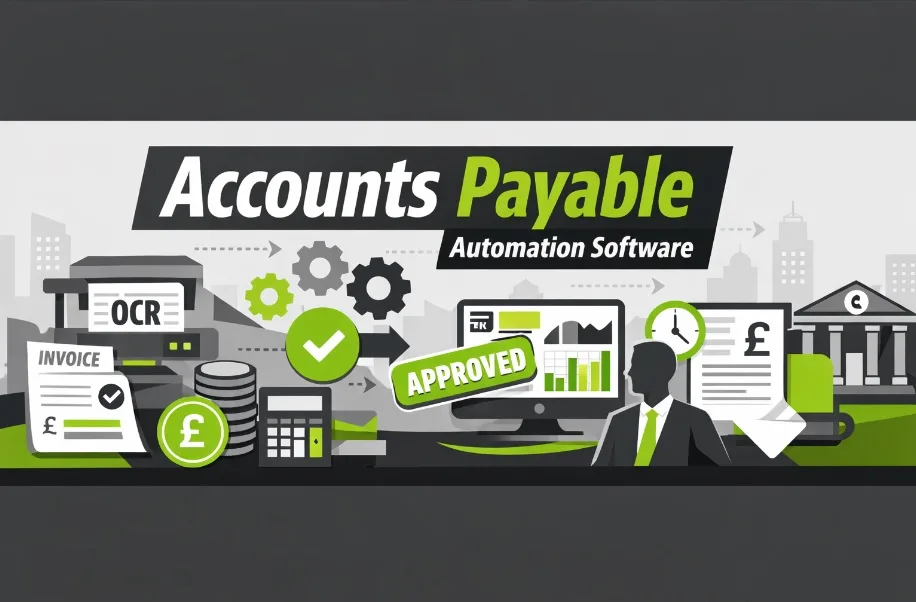
What Is Accounts Payable Automation?
At its simplest, accounts payable automation refers to the use of software to digitise and streamline the end-to-end invoice processing cycle. Instead of relying on manual data entry, email approvals, and paper-based filing systems, automation tools handle much of the repetitive work automatically.
A modern AP automation system typically includes:
- Invoice capture (scanning, email ingestion, or digital submission)
- Data extraction using OCR (optical character recognition)
- Validation against purchase orders or contracts
- Automated routing for approvals
- Integration with finance or ERP systems
- Digital archiving for compliance and audit purposes
The goal is not just to reduce paperwork, but to create a structured, traceable and efficient workflow that improves visibility and control over company spending.
Why Traditional Invoice Processing No Longer Works
In many organisations, invoice processing still follows a familiar pattern. An invoice arrives, someone manually enters the data into a system, it is emailed for approval and then filed away once paid.
While this may have worked in the past, it creates a number of challenges:
1. Human error
Manual data entry inevitably leads to mistakes — incorrect amounts, duplicate invoices or missing references. These errors can delay payments or lead to financial discrepancies.
2. Slow approval cycles
When invoices are routed via email or paper, approvals depend on individual availability. A delayed response from one approver can stall the entire process.
3. Lack of visibility
Finance teams often struggle to answer basic questions like “Where is this invoice in the approval process?” or “Why hasn’t it been paid yet?”
4. Compliance risks
Regulatory requirements such as GDPR, financial auditing standards and internal controls demand accurate record-keeping and traceability. Paper or fragmented digital systems make this difficult.
5. High processing costs
Manual handling increases administrative workload, which in turn increases operational cost per invoice.
These AP challenges are not just inefficiencies — they directly affect business performance.
How Accounts Payable Automation Changes the Process
Accounts payable automation introduces structure and intelligence into what has traditionally been a manual workflow.
Instead of treating invoices as isolated documents, automation platforms manage them as part of a connected digital process.
Automated invoice capture
Invoices are automatically captured from multiple sources. Whether scanned, emailed or uploaded, the system identifies and ingests them into a central platform.
Using OCR technology, key information such as supplier names, invoice numbers dates and line items is extracted without manual input.
Intelligent validation
Once captured, invoices can be checked automatically against purchase orders, contracts or delivery records. This helps ensure that only valid and approved expenses move forward in the process.
Discrepancies can be flagged instantly to reduce the risk of overpayment or fraud.
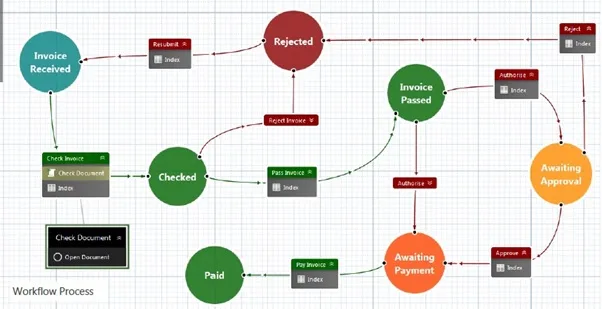
Workflow-based approvals
Instead of relying on ad-hoc email chains, invoices are routed through structured approval workflows.
These workflows can be configured based on:
- Invoice value
- Department
- Supplier type
- Project codes
- Internal policies
Structured workflows ensure that the right people review the right invoices at the right time.
Real-time visibility
One of the most valuable benefits of automation is transparency. Finance teams can see exactly where every invoice is in the process at any time.
Visibility improves decision-making, reduces follow-up queries and helps organisations to maintain better control over cash flow.
Seamless system integration
Modern accounts payable automation software is designed to integrate with ERP and financial systems. This ensures that once an invoice is approved, it can be posted directly into accounting systems without re-entry.
Systems integration reduces duplication and ensures data consistency across platforms.
The Role of Document Management in AP Automation
Accounts payable automation does not exist in isolation. It relies heavily on document management systems to store, organise and secure financial records.
A strong document management foundation ensures that:
- Invoices are stored securely and centrally
- Documents are easily searchable
- Audit trails are automatically maintained
- Access is controlled based on roles and permissions
- Retention policies are enforced automatically
Without this document management layer, automation can become fragmented. With it, organisations gain a complete end-to-end digital finance process.
Automated Records Retention and Deletion
As organisations move towards fully digital accounts payable processes, managing how long documents are retained becomes increasingly important.
Accounts payable automation systems can apply predefined retention policies to invoices and financial records to ensure that documents are stored for the required period and securely deleted when no longer needed.
Automation retention and purge supports compliance with regulations such as GDPR and financial reporting standards, while also reducing the risks associated with over-retention of sensitive data. Automated retention removes the need for manual oversight and ensures that document lifecycles are managed consistently across the organisation.
Key Benefits of Accounts Payable Automation
While the operational improvements are clear, the wider business benefits are often even more significant.
Faster processing times
Invoices that once took days or weeks to process can now be approved in hours or even minutes.
Reduced costs
Automation reduces the need for manual data entry and administrative overhead, which lowers the cost per invoice significantly.
Improved supplier relationships
Faster, more accurate payments improve trust and reliability with suppliers.
Better financial control
Real-time visibility into liabilities helps finance teams to manage cash flow more effectively.
Stronger compliance and audit readiness
Every action is recorded to create an accurate audit trail for internal and external reviews.
Common Misconceptions About AP Automation
Despite its advantages, some organisations still hesitate to adopt automation. This is often due to misconceptions.
“It will replace finance teams”
In reality, automation supports finance teams by removing repetitive tasks. It enables professionals to focus on analysis, strategy and decision-making rather than manual processing.
“It’s too complex to implement”
Modern systems are designed to integrate with your current infrastructure. Implementation is typically more straightforward than expected, especially when phased properly.
“We don’t process enough invoices to need it”
Even smaller volumes benefit from improved accuracy, visibility and compliance. The value is not only in scale but in consistency.
The Future of Accounts Payable
Accounts payable is evolving from a transactional function into a data-driven part of business intelligence.
As automation becomes more advanced, we are seeing increasing use of:
- AI-assisted invoice matching
- Predictive cash flow analysis
- Automated exception handling
- Touchless invoice processing
- Deeper ERP and procurement integration
The long-term direction of the AP Department is clear: less manual intervention, more intelligent processing and greater strategic value from financial data.
How Document Logistix Supports AP Automation
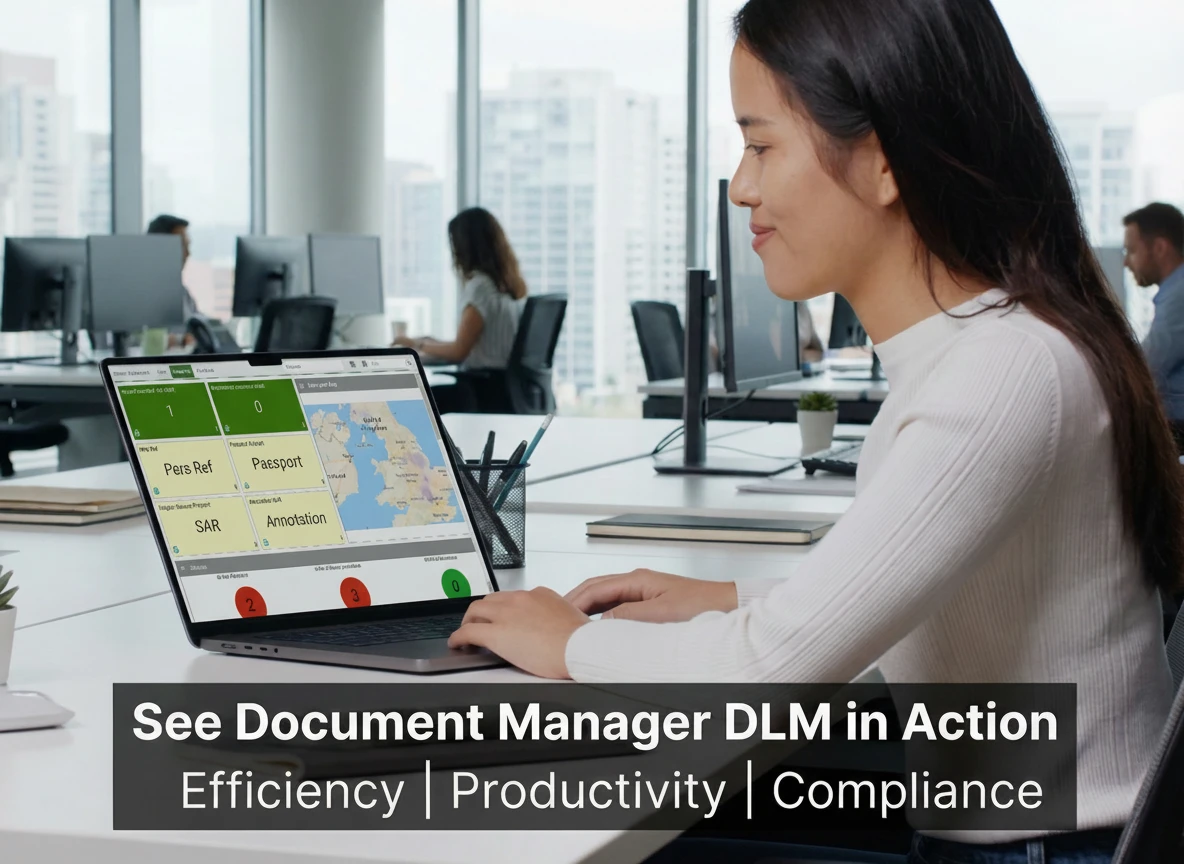
Platforms such as those developed by Document Logistix, Document Manager, help organisations to bring together document management and workflow automation into a single structured environment.
By combining intelligent capture, workflow design and secure document storage, businesses can move away from fragmented invoice handling and towards a fully digital accounts payable process.
The result is not just faster invoice processing, but a more controlled, transparent, and scalable finance operation. See Accounts Payable Automation Software in Action >>>
Final Thoughts: AP Automation
Accounts payable automation is no longer a niche improvement — it has become a core requirement for organisations that want to operate efficiently in a digital-first environment.
By reducing manual effort, improving accuracy and increasing visibility, businesses can transform AP from a reactive administrative function into a streamlined, strategic process.
For organisations that still rely heavily on manual invoice handling, the question is no longer whether automation is useful, but how quickly it can be implemented to deliver measurable benefits.
Frequently Asked Questions: Accounts Payable Automation
Does accounts payable automation help with VAT reconciliation?
Yes, accounts payable automation plays a valuable role in improving VAT reconciliation. By automatically capturing invoice data using OCR and validating VAT amounts against purchase orders and supplier records, the system ensures greater accuracy from the outset.
Automation reduces the risk of manual errors and makes it far easier to reconcile input VAT with accounting records. With all invoices stored in a central, searchable system, finance teams can quickly review transactions, identify discrepancies and produce reliable VAT reports without time-consuming manual checks.
Is accounts payable automation compatible with Making Tax Digital (MTD)?
Yes, modern accounts payable automation software is fully compliant with Making Tax Digital (MTD) requirements.
MTD requires businesses to keep digital records and submit VAT returns through compatible software. AP automation supports this by capturing, processing, and storing invoice data digitally, ensuring that VAT information flows seamlessly into accounting or ERP systems.
This not only supports compliance but also improves the accuracy and efficiency of VAT submissions, while maintaining a complete digital audit trail.
Can accounts payable automation improve VAT reporting accuracy?
Absolutely. One of the key advantages of automation is the reduction of human error in financial processes.
By removing manual data entry and applying validation rules during invoice processing, accounts payable automation helps to ensure that VAT is calculated and recorded correctly. This leads to more accurate VAT reporting and reduces the likelihood of adjustments or penalties.
How does AP automation support audits and compliance?
Accounts payable automation strengthens audit readiness by creating a complete and traceable digital record of every transaction.
Each invoice, approval step and data change is logged automatically to providing a clear, time-stamped audit trail. This makes it much easier to demonstrate compliance with financial regulations, including VAT requirements, and enables auditors to quickly access the information they need without relying on paper records or disconnected systems.
Can accounts payable automation integrate with existing accounting systems?
Yes, most accounts payable automation solutions are designed to integrate with existing accounting and ERP systems.
This ensures that once invoices are approved, the data can be transferred directly without rekeying, which maintains consistency across systems. Integration also supports better reporting, improved financial visibility and smoother compliance with regulations such as Making Tax Digital.
What are the main benefits of accounts payable automation for finance teams?
Accounts payable automation helps finance teams work more efficiently and strategically.
Key benefits include faster invoice processing, reduced administrative workload, improved accuracy, better visibility over cash flow and stronger compliance with VAT and regulatory requirements. By automating routine tasks, teams can focus more on analysis and financial planning rather than manual processing.
Useful links: GDPR compliance checker
Further Reading: Workflow Management Systems