
A Guide to the Key Aspects of Back Office Management and Administration
Introduction
Back office administration serves as the engine room of any organisation, ensuring seamless operations and providing critical support to front office functions. As businesses grow and expand, back office management becomes increasingly important to handle the added responsibilities and complexities. While often behind the scenes, back office tasks play a crucial role in maintaining stability, compliance and profitability. Effective back office administration fosters organisational agility, drives efficiency and creates the framework within which businesses can thrive.
This guide explores key aspects of back office administration and offers best practices to optimise its impact.
Streamlining Administrative Support
Back office departments are the backbone of administrative support functions. Streamlining admin processes involves automating repetitive tasks, centralising documentation and implementing task management systems. Effective scheduling tools, cloud-based collaboration platforms and integrated communication channels ensure smoother coordination across departments. Coordination and integration not only improve efficiency but also free up resources for strategic priorities.
Back Office Software Solutions
Back office software solutions are indispensable for streamlining and automating back office operations. These solutions are designed to enhance efficiency and productivity by reducing manual processes and minimising errors. Key features often include accounting software, inventory management, and document management systems, all of which play a crucial role in maintaining smooth operations.
Automation frees up staff to focus on more strategic tasks, which drives business growth and improves customer satisfaction. These solutions can be customised to meet the specific needs of a business and ensure seamless integration with existing systems and processes.
The rise of cloud-based back office software solutions offers additional benefits such as scalability, flexibility and cost savings. These platforms enable businesses to manage their operations from anywhere, providing quick access to critical information and facilitating real-time collaboration.
Moreover, back office software solutions improve financial management by automating tasks like payroll processing, accounts payable, and accounts receivable. This not only reduces operational costs but also ensures accurate and timely financial transactions, contributing to overall business stability.
In summary, adopting back office software solutions is a strategic move for any company looking to reduce costs, improve operational efficiency, and maintain a competitive edge in the market.
Navigating Legal and Compliance Assistance
Legal and compliance functions are vital for protecting the organisation from liabilities and ensuring adherence to regulatory standards.
Ensuring compliance in these areas is crucial to mitigate financial, legal and operational risks.
Back office teams must stay updated on relevant laws, conduct regular audits and maintain meticulous records. Company policies play a significant role in maintaining compliance by streamlining the capture and storage of essential HR documentation.
Leveraging compliance management software simplifies tracking deadlines and updates, and minimises the risk of penalties.
Optimising Inventory Management
Inventory management is critical for businesses dealing with physical products. Back office teams should focus on real-time tracking systems, accurate forecasting and supplier relationship management.
Implementing enterprise resource planning (ERP) systems can integrate inventory processes with finance and procurement to reduce waste and avoid stock shorta
Back Office Security and Compliance
Ensuring robust back office security and compliance is a critical component of efficient back office management. Protecting sensitive data and adhering to regulatory requirements are essential for maintaining seamless business operations and safeguarding the company’s reputation.
Effective back office security measures include data encryption, access controls, and regular software updates to prevent cyber threats. These measures help protect against data breaches and ensure that sensitive information remains secure.
Compliance with industry regulations, such as GDPR and HIPAA, is crucial for avoiding fines and reputational damage. Implementing robust policies and procedures, including employee training and awareness programs, ensures that all staff members understand their roles in maintaining compliance.
Regular audits and risk assessments are vital for identifying vulnerabilities and ensuring that the company remains compliant with regulatory requirements. These practices help businesses stay ahead of emerging threats and adapt to changing regulations.
Prioritising back office security and compliance not only minimises the risk of data breaches but also builds customer trust and confidence. By demonstrating a commitment to protecting sensitive information, businesses can enhance their reputation and ensure seamless business operations.
In conclusion, back office security and compliance are ongoing processes that require continuous monitoring and improvement. By staying vigilant and proactive, businesses can protect their operations, maintain regulatory compliance, and foster a secure and trustworthy environment.
Facilitating Research and Development Support
Research and development (R&D) often require back office support for budgeting, compliance documentation and resource allocation. Automating manual tasks can significantly enhance efficiency in R&D activities by reducing the time spent on repetitive processes. By establishing clear workflows and leveraging project management tools, back office teams can enhance efficiency in R&D activities. Additionally, ensuring seamless communication between R&D and other departments fosters innovation.
Elevating Training and Development
Training and development initiatives ensure that employees stay competitive and aligned with organisational goals. Incorporating various technologies into training methodologies, such as classroom training and e-learning, can significantly enhance the skills and best practices of back office staff. Back office teams can streamline training functions by maintaining a robust learning management system (LMS), tracking employee progress and managing training schedules. Collaborating with HR to align programs with strategic goals maximises their impact.
Balancing Bookkeeping
Accurate bookkeeping is the cornerstone of financial stability. Streamlining processes such as invoice processing, payroll management and reconciliation is essential. Automating routine tasks with accounting software reduces errors and enhances reporting accuracy, which provides actionable insights for decision-makers.
Efficient Data Processing Tasks
Data processing tasks are integral to analytics, reporting and decision-making. Emphasising data security in these tasks is crucial for mitigating risks and protecting sensitive information. Ensuring data accuracy, implementing secure storage systems and adopting automated data entry tools can significantly enhance efficiency. Back office teams should prioritise data privacy and compliance with regulations such as GDPR or HIPAA to safeguard sensitive information.
The Role of Document Management in Back Office Administration
Document management is a cornerstone of efficient back-office documentation and administration, ensuring the seamless organisation, storage and retrieval of critical information. It serves as the backbone of operations, enables streamlined workflows and reduces manual inefficiencies. Effective document management improves accuracy, supports compliance with regulatory standards, and facilitates timely decision-making by providing easy access to up-to-date records.
Using OCR technology and AI-powered data capture in the back office enables staff to digitise paper documents quickly and accurately. Check-out our built-in OCR solution which is ideal for back offices to scan and upload documents to a central document repository.
By digitising and centralising digital documents, businesses minimise the risk of data loss and enhance security through controlled access. It also aids in maintaining transparency and collaboration, as teams can share and review documents in real time. Automated document workflows reduce back-office administrative burdens, which enables staff to focus on strategic tasks.
In modern back-office environments, integrated document management systems provide scalability, aligning with evolving business needs and reducing operational costs. Ultimately, robust document management enhances productivity, fosters organisational resilience and ensures a solid foundation for effective administrative support.
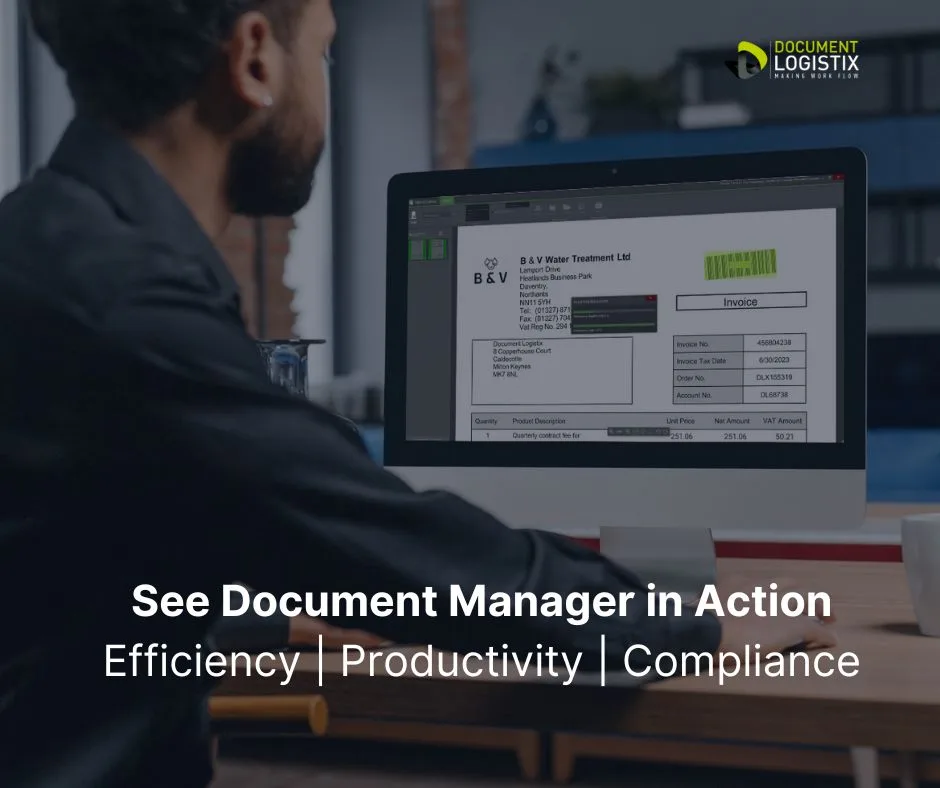
Document Logistix’ Document Manager software suite caters for all back office functions and provides a secure central hub for document management. Centralisation and systems integration with Accounts, ERP, CRM as well as Microsoft Office to ensure effective communication, optimal workflows, information access and compliance.
At Document Logistix, we have nearly thirty years’ experience working with every department, in every industry. Our aim is always to integrate, centralise and automate to create the most efficient business operations.
Key Departments in Back Office Administration
Accounts
The accounts department is responsible for managing financial transactions, budgeting and compliance. Key responsibilities include invoicing, expense tracking, payroll and preparing financial statements. Integration with other departments ensures smooth cash flow and financial stability.
Document Manager is the ideal Accounts and Invoice management solution.
Human Resources (HR)
HR handles employee-related records and tasks, including recruitment, payroll and benefits administration. Back office HR functions also involve maintaining accurate employee records, managing compliance with labour laws and facilitating employee engagement initiatives.
Document Manager enables HR professionals to manage HR documents efficiently and compliantly, and includes a missing document finder and automated data retention and purge function.
Legal
The legal department ensures that the organisation adheres to applicable laws and manages risks associated with contracts, intellectual property and disputes. Back office legal support involves drafting documents, maintaining regulatory records and coordinating with external legal advisors when needed.
Procurement
Office departments oversee sourcing materials and services essential for business operations. Back office procurement tasks include vendor management, purchase order processing and contract negotiations. Efficient procurement ensures cost-effectiveness and maintains supply chain stability.

Best Practices in Back Office Administration
- Leverage Technology
Use automation tools and software to handle repetitive tasks efficiently. - Maintain Clear Communication
Foster collaboration between back office and front office teams to align goals. - Standardise Processes
Implement clear workflows and checklists to ensure consistency and reduce errors. - Focus on Training
Equip back office staff with skills to handle evolving responsibilities. - Emphasise Security
Protect sensitive data with robust cybersecurity measures and access controls. - Regular Audits
Conduct periodic reviews of processes to identify inefficiencies and areas for improvement.
Conclusion
Both front office and back office administration are integral to an organisation’s success. While the front office drives revenue and customer engagement, the back office ensures operational efficiency, compliance and financial stability. Together, they create a cohesive framework that fosters agility, stability and profitability which enables businesses to adapt and grow in a competitive environment.
Efficient back office management enhances the effectiveness of the front office team, leading to better customer satisfaction and organisational success.

Q&A: Back Office Administration
1. What is back office administration?
A. Back office administration refers to overseeing the administrative and support operations of a business, such as data management, HR, accounting and IT. It ensures smooth internal processes that indirectly support customer-facing functions.
2. Why is back office administration important?
A. Efficient back office administration streamlines operations, improves productivity, ensures compliance with regulations and reduces operational costs. It provides a strong foundation for front-office activities by handling essential administrative tasks.
3. What tools are commonly used in back office administration?
A. Common tools include Enterprise Resource Planning (ERP) systems, Customer Relationship Management (CRM) software, document management systems, payroll solutions and data analytics platforms. These tools enhance efficiency and accuracy.
4. How can back office administration improve customer satisfaction?
A. While not directly customer-facing, back office administration ensures that services are delivered efficiently by supporting smooth operations, timely processing and accurate handling of customer data and transactions.