Document systems integration with business applications. Integrated document hubs.
Document System Integration
Document systems integration is essential to achieve maximum business efficiency. Retain systems that work well for your business and make staff more efficient by integrating with Document Manager software. You can eliminate potential information silos and enjoy a document management hub at the heart of your operations.
Our integrated document management system, Document Manager, is built to work within your IT ecosystem, across email, team portals, existing systems and popular business software. Document Manager uses OCR and AI and integrates with key business hardware like scanners and multifunction devices to convert paper to digital files accurately.
Learn how Document Manager works with standard business email and admin functions to capture information, as well as with enterprise systems, Accounting software, HR systems, Enterprise Resource Planning (ERP) and CRM systems.
Achieve full document integration with Document Manager as your secure centralised document repository when operating Salesforce or Google Workspace apps. Integrate with popular email clients such as Microsoft Outlook.
In this article, we look at data models and the integration process to help you build a systems integration strategy and meet your business objectives.
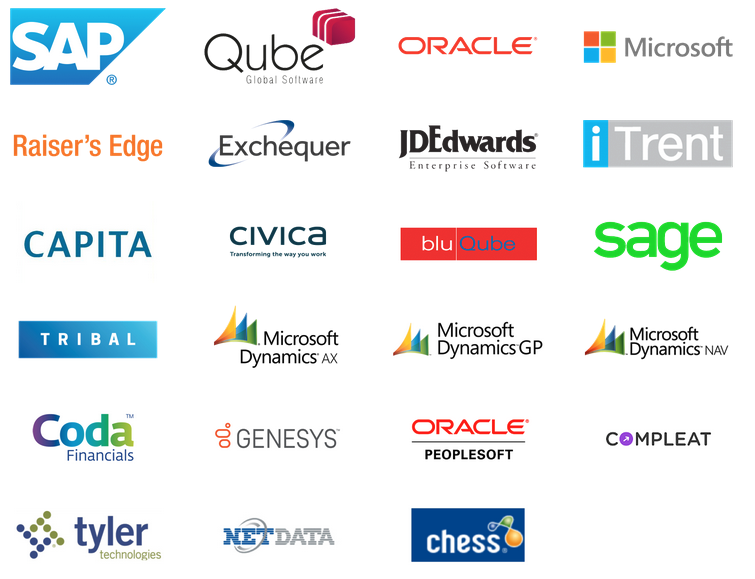
Document Logistix’ Document Manager software integrates with leading third-party solutions SAP, iTrent, Qube, Oracle, Microsoft Office, Microsoft Dynamics, Exchequer, Sage Accounting, Civica, Tribal, Compleat, Capita, JDE, Genesys, Coda, Raiser’s Edge.
What is Document Systems Integration?
Document systems integration involves combining different software, hardware and processes to streamline the management, sharing and storage of documents within an organisation. Document systems integration enables seamless communication between systems, improves efficiency, reduces redundancies and ensures secure access.
Systems integration includes document capture, workflow automation and compatibility with your installed technologies.
By scanning paper documents using a combination of optical character recognition and AI, and working entirely with electronic documents, integrated electronic document management systems boost data access, security, collaboration and regulatory compliance.
Integrate document management as a secure, central hub to work across business applications and enterprise platforms
Document Management Software (DMS or EDMS) is frequently integrated with other business systems. DMS can function as a hub, in combination with leading third party systems, to manage information across multiple business applications.
Document management software can also be integrated with standard business applications such as email to streamline information capture and workflow processes, or CRM systems.
Users working on a document from the central document hub will not know that they have left their HR or Accounting system. Maintaining a familiar desktop working environment for users is a function of integrating Document Manager that enhances adoption and minimises the need for training.
Document management integration reduces duplication of effort and prevents the proliferation of data silos.
Document management integration streamlines business processes and promotes productivity.
APIs such as REST API architecture for smooth document management integration and content sharing
Most open-source and proprietary EDM systems use one open standard to communicate with external applications. These standards and protocols allow interaction between programs that require interchange of documents or other types of data. Commonly used open standards include:
LDAP (Lightweight Directory Access Protocol) is primarily designed to allow applications to share directory-level information and is frequently used to implement single sign-on features.
ODMA (Open Document Management API) simplifies interoperability of standard desktop applications.
REST (Representational State Transfer) API architecture helps in the sharing of hypermedia (such as files, text, images and video) between applications.
Feedback on Document Logistix integration projects from partners and customers is excellent. If you have questions about integrating your business systems with a document management system, speak to Document Logistix.
Don’t tolerate delays in implementation or increases in cost. We will give you straightforward advice on the best ways to integrate with document management systems.
Document Systems Integration Q&A
Q1: What is document management systems integration?
A: Document management systems integration is the process of linking various business management systems, tools and workflows to enable seamless data and document exchange, improve efficiency and support process automation within an organisation.
Q2: What are the key benefits of document systems integration?
A: Key benefits include enhanced productivity through automated workflows, reduced redundancy, improved document accessibility across departments, future proofing, better data security, risk mitigation and streamlined compliance with industry standards.
Q3: How do you ensure a successful document management system integration?
A: Success involves thorough planning, using compatible technologies (APIs, API gateway, standardised formats), prioritising security, conducting user training and performing rigorous testing to minimise disruptions during and after the document management system implementation.
Q4: What challenges can arise during document management systems integration?
A: Common challenges include compatibility issues between existing systems, data migration complexities, resistance to change from employees and ensuring adequate security measures. Addressing these requires careful planning, stakeholder involvement and phased implementation with proper support and training.
Related Document Management Articles
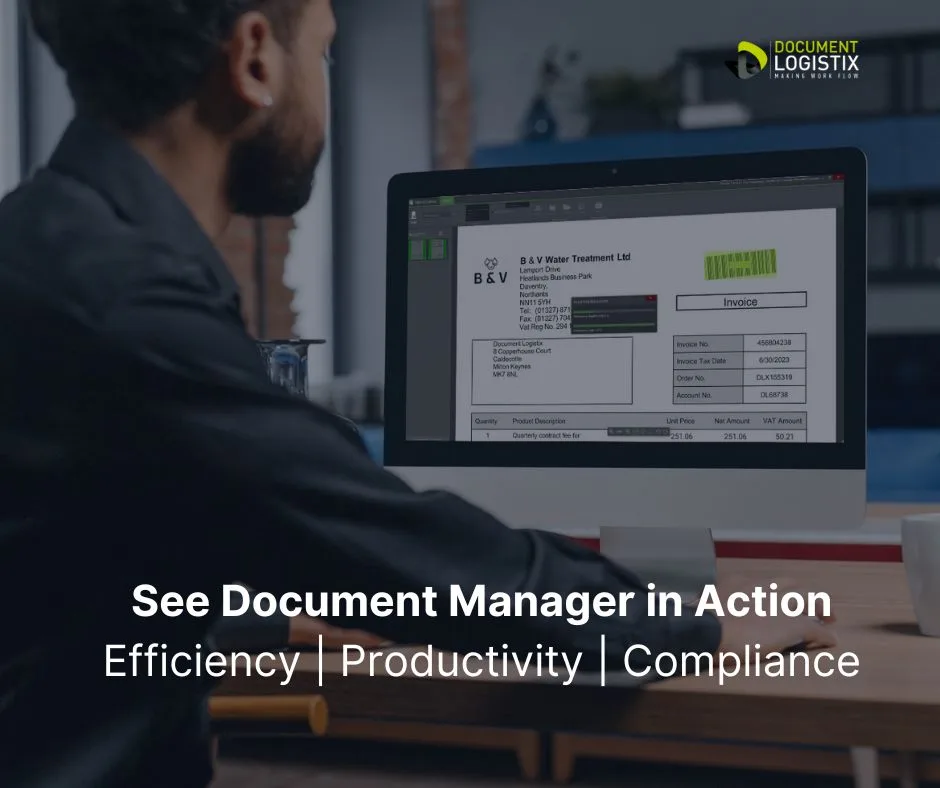
Control Panel for All Business Systems
Document Manager provides a user-friendly interface from which to monitor your tasks and workflows across all installed systems.
An at-a-glance dashboard provides a clear view across a unified content management system.
Introduce company-wide standard operating procedures (SOPs) to track documents and enhance project management with real-time audit logs.
We offer installation options including cloud-based document management, on-premises systems and SaaS to meet the needs of small business and large enterprises.
Integrate all your documents in one location to organise files and control access, enhance collaboration, reduce duplication and save time.
Ask us to provide you with a business case and a return on investment schedule for how Document Logistix’ all-in-one integrated document solution could help your organisation.
Document Systems Integration Centralises Compliance Control
By centralising your digital assets, you can manage compliance protocols efficiently and reliably in a single centralised document repository.
With business process automation, you assure compliance with industry standards and strict regulations such as GDPR, HIPAA, FERPA and CCPA.
Document systems integration introduces security and regulatory compliance functions across all your systems, including end-to-end encryption, document version control, data redaction tools, role-based access controls, automated retention and purge, and full system activity audit trails.
Top 3 Best Practices for Document Systems Integration
Document Logistix will consult with you to understand your current systems and your document management integration objectives.
We will help you to establish a business case for document management integration to ensure a measurable return on investment. Our document management experts will advise before, during and after system deployment on important matters, such as:
Thorough Needs Assessment
Evaluate your organisation’s document workflows, systems and goals. Identify integration requirements, compatibility issues and potential bottlenecks to ensure the solution addresses all needs effectively.
Standardised Formats and Protocols
Use standardised file formats (e.g., PDF documents, XML) and communication protocols (e.g., APIs) to enable seamless interaction between different systems and ensure scalability for future updates.
Security and Compliance
Implement robust access controls, encryption and compliance with industry regulations (e.g., GDPR, HIPAA) to protect sensitive data and maintain trust during and after integration.
Document Management Integration: Customer Success Stories
Document Logistix has successfully installed hundreds of document management systems, frequently with significant integration demands.
We recently helped the Hillcrest Group to integrate four finance departments in its business, each with its separate processing and reporting protocols.
Customers such as Queens University Belfast and the automotive specialist, Sytner, report seamless document management integration with their installed HR systems.
It’s important to note that, with centralised data, all departments can access the same sensitive information whether it’s for invoice processing, payroll or employee onboarding. Centralisation eliminates duplication of effort and double budgets for users such as HR Managers, Accounts teams and Customer Services.


Conclusion: The Value of Integrated Document Management Systems
Integrating document management systems into an organisation’s workflows is not merely a technical upgrade – it is a strategic investment in efficiency, collaboration and compliance.
By unifying document storage, retrieval and file sharing processes, integrated document management solutions eliminate redundancies, reduce operational silos and empower teams with secure access to critical information in real time.
A well-implemented document management system integration streamlines data management, fosters transparency and supports data-driven decisions through robust analytics and version control. Furthermore, it aligns with evolving regulatory standards and mitigates risks associated with data breaches or unauthorised access.
As organisations continue to adapt to hybrid work models and digital transformation initiatives, the role of a cohesive document management system will only grow in importance.
The ability to integrate seamlessly with other business tools and systems ensures that a document management system remains a dynamic, scalable solution that evolves with organisational needs.
Ultimately, embracing document management system integration positions an organisation not only to operate more efficiently today but also to innovate and scale effectively for tomorrow’s challenges.

Technical Support
e: support@document-logistix.com
t: UK & Europe 01908 366 722
t: USA +1 (866)865-2476