Main Document Management Concerns of HR Professionals at HR Summit
I recently attended HR Summit and the delegates were kind and open enough to explain their concerns and the challenges involved in their current HR data and document management processes. To address these concerns I have compiled these suggestions and options for optimising HR data.
If these topics are of interests to you, I would be delighted to take some time with you to explain further.
Best wishes, Emilie Martin.
The Top Issues that Concern the HR Professionals included:
- Working with paper documents and duplicate scanned documents that do not always match
- Too much use of paper
- Lack of an efficient or reliable data retention and deletion process
- Concerns about using Google Drive or SharePoint for security, auditability and compliance reasons
- Lack of user permissions for access, editing and deletion
- Lack of audit trail of document access and changes
- Documents stored in too many locations
- Worries about integration
- Worries about learning new systems
Optimising HR Data
In today’s digital age, Human Resources (HR) departments manage a vast amount of sensitive employee data. From personal identification details to salary, performance and medical information, this data must be securely stored, easily accessible to authorised personnel and compliant with a host of privacy regulations.
However, fragmented data storage systems and the over-reliance on platforms like Google Drive introduce inefficiencies and potential security risks, making them less than ideal for handling HR’s critical information.
Centralised storage solutions, permission-based access controls and automation are essential in modernising HR data management while ensuring both efficiency and compliance.
The Problem with Fragmented Storage and Google Drives
Many HR departments, particularly in small and medium-sized enterprises (SMEs), rely on fragmented storage systems, often using a combination of cloud services like Google Drive, local servers, and even paper files.
While paper and simple cloud services may seem convenient and cost-effective at first, they create several significant challenges:
- Data Silos and Inaccessibility
With fragmented storage, employee data is often stored in different locations (e.g., performance records in one system, payroll data in another), making it difficult for HR teams to access complete employee profiles efficiently. This fragmented approach leads to delays in decision-making, increased time spent on administrative tasks and confusion about where to find specific information. - Increased Risk of Data Breaches
Google Drive and other cloud-based storage systems lack robust, enterprise-level security controls unless specifically configured. Employees may unknowingly share sensitive files with unauthorised personnel, or worse, expose data through incorrect permission settings. Fragmented systems also lack comprehensive security protocols, making HR data vulnerable to external threats like hacking, phishing and unauthorised access. - Compliance Complications
Many global data protection laws, such as the General Data Protection Regulation (GDPR) and the California Consumer Privacy Act (CCPA), require organisations to maintain stringent controls over how personal data is stored, accessed, and managed. In a fragmented system, tracking who accessed data, ensuring proper permission levels and conducting compliance audits become cumbersome and prone to errors. This exposes companies to fines and reputational damage. - Version Control Issues
In systems like Google Drive, managing different versions of the same document can be challenging. HR teams may unintentionally access or work on outdated versions of employee contracts, policies or other critical documents, which leads to inconsistencies in records and decisions based on incorrect information.
Centralised Storage for Optimising HR Data: A Smarter Solution
Centralised storage addresses the inefficiencies of fragmented systems by consolidating and optimising HR data into a single, secure repository. By doing so, HR teams can enjoy several key benefits:
- Improved Accessibility
With centralised storage, all employee data is accessible from one location, streamlining processes such as onboarding, performance reviews and compliance reporting. HR staff can quickly find the information they need without switching between systems, improving productivity and reducing the likelihood of errors. - Enhanced Security
A central storage system provides greater control over data security, allowing organisations to implement stronger encryption, automated backups, and advanced cybersecurity measures. This reduces the risk of data breaches and ensures that sensitive information remains protected. - Compliance Made Easy
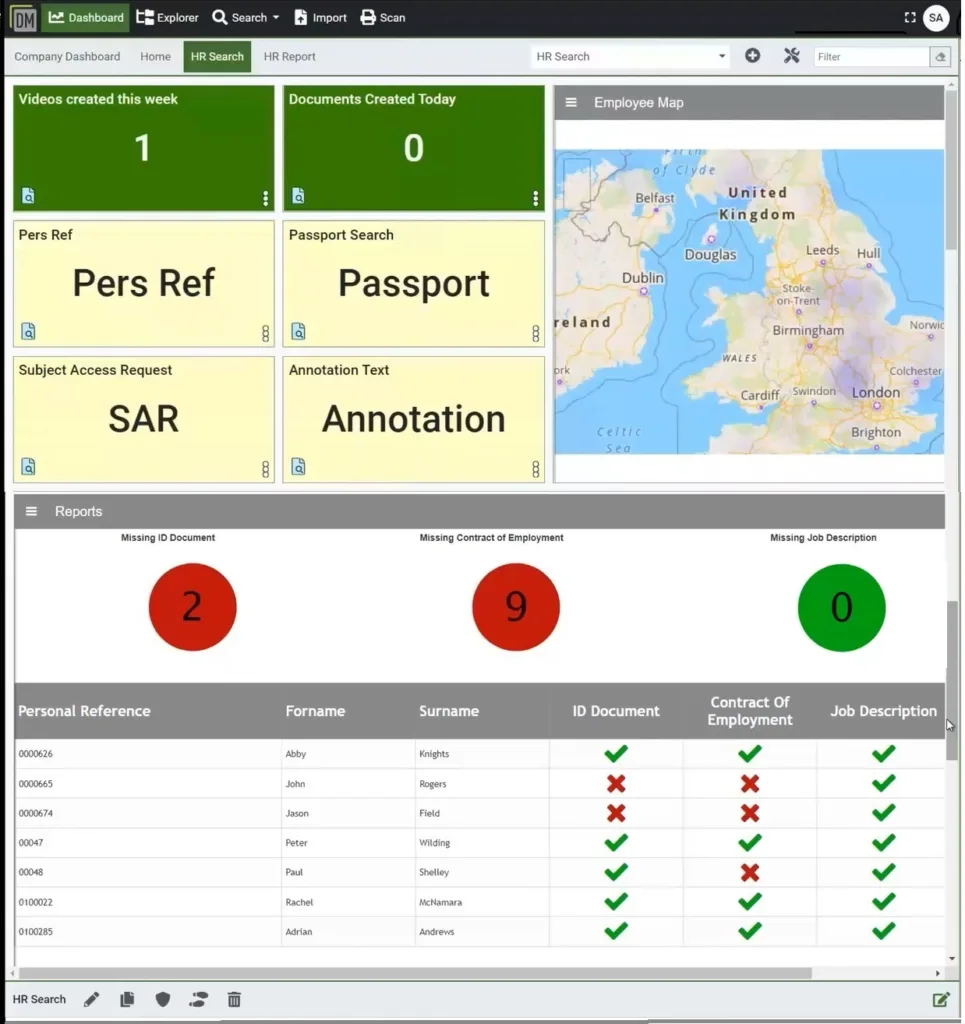
Centralised solutions offer built-in audit trails, making it easy for HR teams to track who accessed data and when. Document Manager with pre-configured compliance settings that meet regulatory requirements, helping businesses avoid ICO scrutiny and business disruption.
Why HR professionals don’t need to worry about learning a new system
HR professionals don’t need to worry about learning a new system when their current programs are integrated with document management software because integration is designed to be seamless and user-friendly. Instead of switching between multiple platforms, the document management system works directly within the tools HR professionals already use, such as payroll software, performance management systems or HRIS platforms. It’s a smart way to streamline processes and optimise HR data.
Document Logistix approach to integration allows for continuity in your current workflow, which reduces the need for additional training or technical expertise. Integrated systems automate document handling – like storing, retrieving and updating employee records – to make everyday tasks faster and more efficient without introducing new complexity.
Intuitive interfaces and familiar processes minimise the learning curve, so HR teams can focus on strategic tasks instead of spending time on manual data entry or managing files. With system integration, HR professionals can enjoy the benefits of streamlined document management without the stress of adopting a completely new system.
Permission-Based Access: Keeping Sensitive Data Safe
One of the biggest challenges in HR data management is balancing the need for accessibility with the need for confidentiality. Not everyone in the organisation needs access to all employee information, and giving broad access can lead to data privacy violations. This is where permission-based access controls come into play as part of your HR data optimisation strategy.
- Role-Based Permissions
Centralised storage systems allow administrators to set specific access levels based on employee roles. For instance, payroll staff may have access to salary and tax information, while managers can view performance evaluations, but only HR directors can see the complete employee file. This ensures that only authorised personnel have access to sensitive data, which reduces the risk of unauthorised access, accidental amendments or deletions, or leaks. - Improved Accountability
With permission-based access, there’s a clear audit trail of who accessed what data and when. This not only supports compliance with regulations but also enhances transparency and accountability within the HR team.
Automation: The Game Changer for HR Professionals
Automation in HR data management offers significant advantages, particularly when dealing with large volumes of information. By automating routine tasks, HR teams can focus on more strategic initiatives and improve overall efficiency. Here’s how automation makes a difference:
- Eliminating Manual Data Entry
One of the most time-consuming tasks in HR is manual data entry – whether it’s inputting new hire details, updating personal information or processing payroll changes. Automated systems can pull data directly from sources like employee self-service portals or integrated software, reducing the time spent on data entry and minimising errors. - Streamlining Onboarding
Automating the onboarding process can help HR departments manage new hire paperwork, benefits enrolment and policy acknowledgment more efficiently. Centralised systems can trigger automated workflows that notify relevant departments (IT, Finance, etc.) to prepare necessary tools and documents for new employees. - Compliance and Reporting
Automation also helps HR professionals stay on top of compliance requirements. With an automated system, HR can receive reminders for critical compliance tasks, such as data retention deadlines or necessary audits. Moreover, generating reports for regulatory purposes or internal review becomes a matter of a few clicks, rather than hours of manual data aggregation. - Efficient Performance Reviews and Training
HR automation platforms come with integrated performance management tools that streamline the entire review process. Instead of manually tracking employee progress, HR can rely on automated reminders, templates and data collection to ensure that performance reviews are timely, consistent and objective.
The Future of HR Data Management
As HR departments continue to face increased data complexity, it’s clear that relying on fragmented storage solutions and unsecured platforms like Google Drive is not sustainable. The future of HR data management lies in centralising storage, implementing permission-based access and embracing automation. These solutions not only enhance efficiency and security but also ensure that organisations remain compliant with evolving regulations, safeguarding both employee privacy and the company’s reputation. Plan now to optimise HR data.
By transitioning to a centralised, automated system, HR professionals can focus less on administrative tasks and more on strategic functions like employee engagement, talent development and organisational culture – ultimately driving better business outcomes.
The Benefits of HR Audit Trails when Optimising HR data
Document management audit trails provide significant benefits to HR departments. First, they enhance compliance by tracking all actions taken on employee records, ensuring adherence to legal and regulatory requirements like GDPR or HIPAA. This helps HR avoid investigation and maintain data integrity.
Second, audit trails provide transparency and accountability, recording who accessed, modified or shared documents. Transparency reduces the risk of unauthorised data breaches and improves trust between employees and HR.
Third, audit trails enhance efficiency in resolving disputes or tracking errors. With a clear log of changes, HR can quickly trace issues and correct mistakes, saving time on investigations. In addition, audit trails facilitate the fulfilment of internal QA and external audits.
Finally, audit trails support data security, enabling HR to monitor document activity and detect suspicious behaviour, thus minimising the risk of fraud or insider threats.
Overall, document management audit trails streamline operations while reinforcing compliance, security and trust within the HR function.
Related articles
Compliance Automation in Document Management
HR Document Management Best Practices
A Complete Guide to Digital Document Management
See Document Manager in Action for HR Professionals >>>